
IX Calculating the Total Cost of the Iran War
“Of course the people don't want war... All you have to do is tell them they are being attacked, and denounce the peacemakers for lack of patriotism... It works the same in any country.”
Hermann Goring at Nurenberg Trials
In July 2026, Trump asked Congress to boost the US war budget from $900 billion in 2026 to $1.5 trillion in 2027 (including $350 billion for the Iran War). $1.5 trillion will be the largest war budget ever.
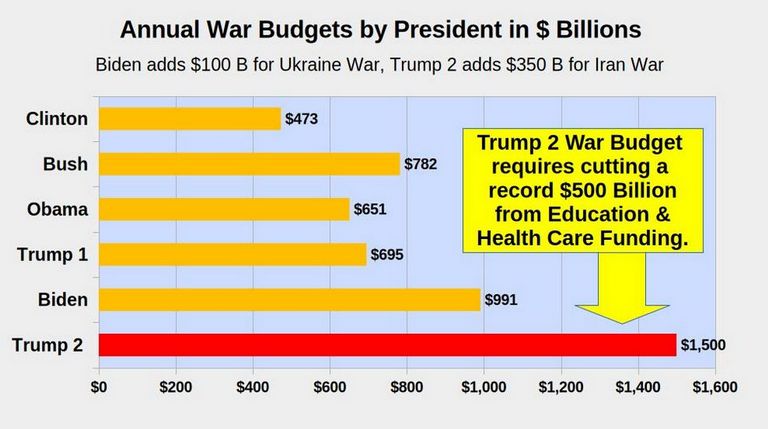
On April 7, 2026, Harvard Professor Linda Bilmes published a study indicating that the Iran War will eventually cost US tax payers trillions of dollars. She noted that while Bush officials estimated the cost of the Iraq War to be $200 billion, it eventually cost more than $5 trillion. She also noted that even before the Iran War started in February, the US already owed our past war veterans $7.3 trillion dollars in medical and educational benefits. Here is a LINK to her 19 page study on estimating the hidden costs of wars.
When the United States invaded Iraq in 2003, the national debt was under $8 trillion. Today, the national debt is approaching $40 trillion.
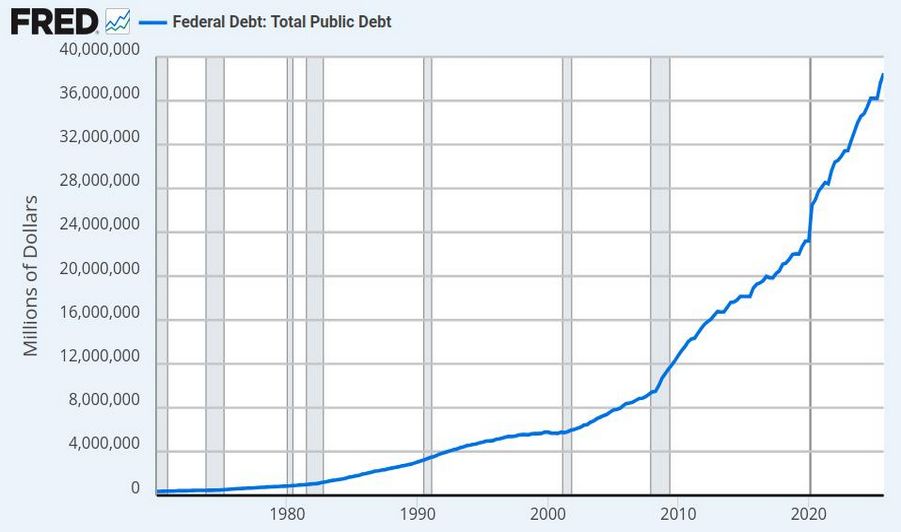
Well over half of this debt resulted from the cost of all of the endless wars the US has been in during the past 26 years.
However, the Iran War is going to make paying off this debt almost impossible because one of the many financial casuallties of this war has been the US Petrodollar. The Petrodollar was started 50 years ago whereby the US agreed to protect Saudi Arabia in return for them requiring that anyone buying oil must use US Dollars. On August 7, 2026, Iran announced tolls on all ships going through the Strait of Hormuz. They likely will require this toll to be paid in Chinese currency – which will lead to the Death of the US Petrodollar.
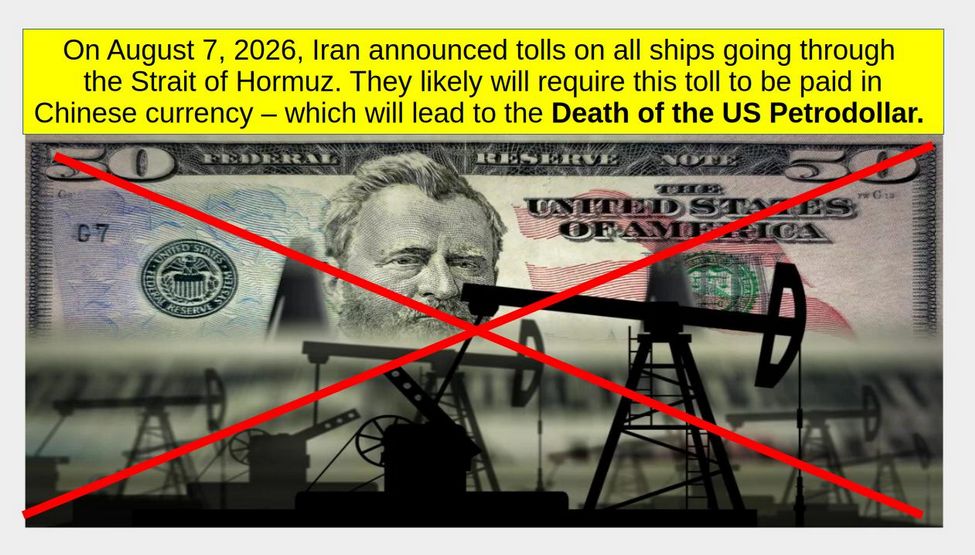
Since countries will no longer need US currency, over the next few years, they will trade their US dollars for Chinese dollars – which over time will severely devalue the US dollar – further depressing the US economy. The problem is that both major political parties have consistently voted for more and more war spending.
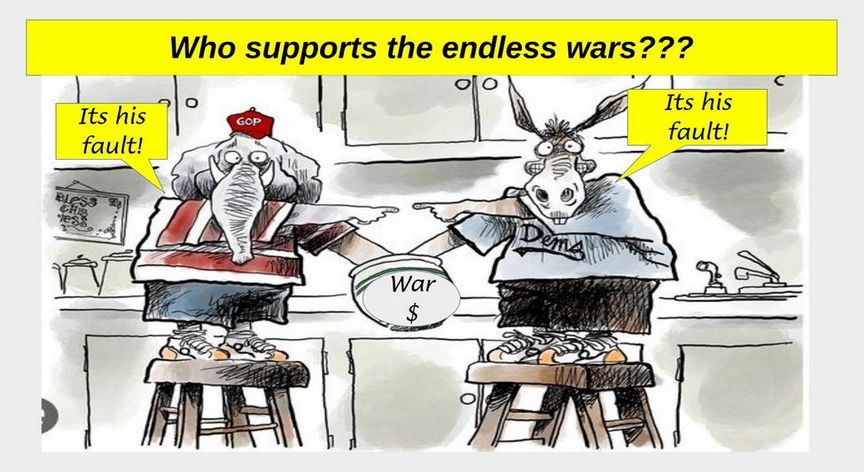
Both parties claim we need to keep spending trillions of dollars on the war machine to protect America from a never-ending series of enemies:
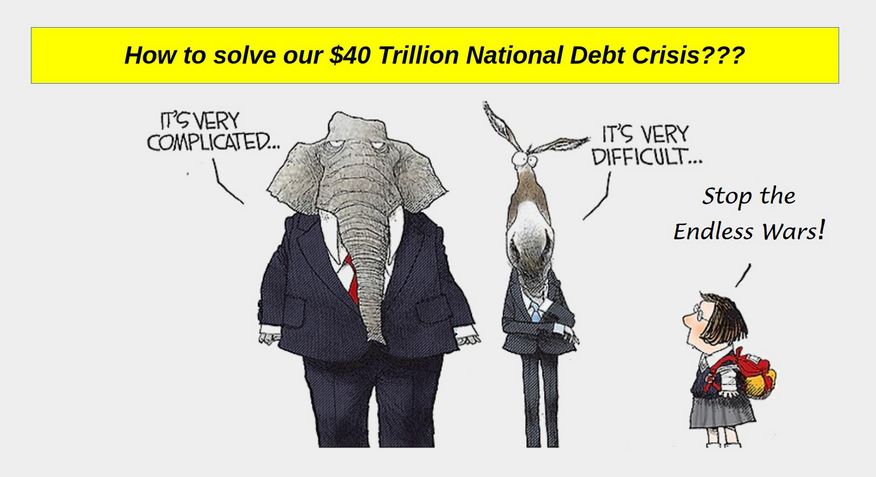
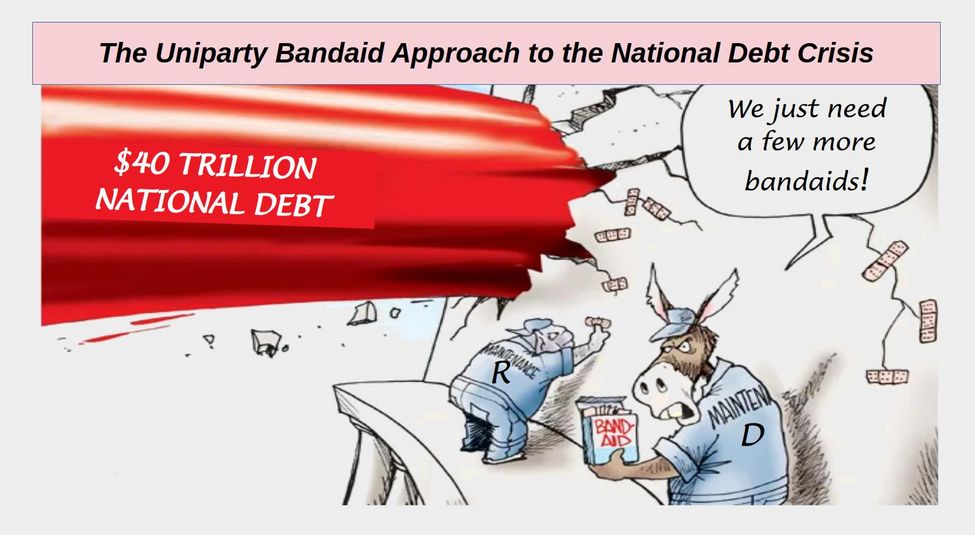
The Iran War is exploding our National Debt.
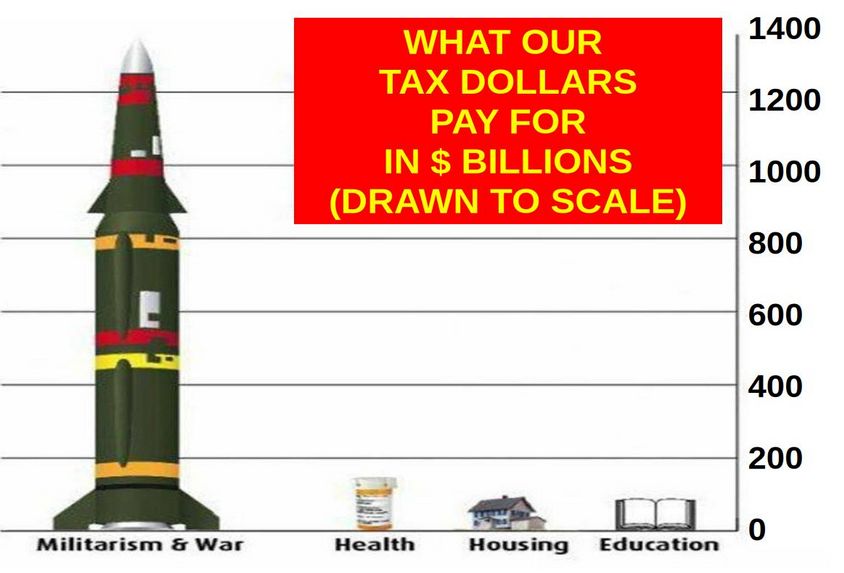
Meanwhile, because the total “discretionary budget” is about $2 trillion, increasing war spending by $600 billion means cutting spending on everything else by $600 billion.
The 2027 War Budget includes an unconstitutional clause to merge the US and Israeli Military
The 2027 National Defense Authorization Act (aka NDAA) will increase annual Pentagon spending by 67 percent to $1.5 trillion. But to add insult to injury, NDAA Section 219 creates a framework for permanent military integration that places our nation's independent decision making at risk.

Provisions in the 2027 NNDAA mandate that the U.S. State Department, the U.S. Commerce Department, and the heads of other Federal departments and agencies cooperate with their Israeli counterparts for the purpose of consolidating U.S. and Israeli military activities.
No foreign nation, regardless of whether it is Israel, Britain, Canada, France, or Japan, should be integrated into permanent executive, military, technological, intelligence, and research structures in a manner that diminishes American sovereignty and democratic accountability.
The legislation specifies Israel-U.S. coordination with America’s Defense Advanced Research Projects Agency (DARPA), the United States Space Command, Biological Warfare, and other war technologies.
The Constitution was designed to preserve the sovereignty of the American Republic through democratic accountability, separation of powers, and civilian control of government.
Democracies function because citizens can change policy through elections. But when military, intelligence, and technologies become permanently integrated across different national governments and bureaucracies, decision making can no longer be changed by the voters. The democratic question, regardless of the technology involved, is simple: Who governs these technologies, and for what purpose?
Will decisions remain accountable to elected representatives and the American people, or will authority increasingly reside within security agencies, military institutions, and specialized technical bureaucracies beyond meaningful democratic oversight?
As national security priorities become embedded throughout government, civilian decision making becomes subordinate to military logic. Policies that should be determined through democratic debate become the province of security institutions, technical experts, and permanent bureaucracies.
The Founders repeatedly warned against permanent foreign alliances because they understood the motivations of leaders of other countries may be inconsistent with American ideals or interests.
The Constitution was deliberately designed to prevent precisely this type of entanglement. The President serves as Commander in Chief of the Armed Forces of the United States. Congress possesses the authority to declare war.
Together these provisions were meant to ensure that decisions involving American lives, American treasure, and American military power remain accountable to the American people. Section 219 of the 2027 NDAA bill moves the nation in the opposite direction. It creates permanent structures through which military, intelligence, technological, and strategic functions become increasingly intertwined with those of another government.

There are at least six reasons why Section 219 violate our US Constitution:
#1: IT VIOLATES THE COMMANDER IN CHIEF CLAUSE
Article II, Section 2 of the U.S. Constitution designates the President as Commander in Chief of the Armed Forces of the United States. Congress cannot constitutionally dilute, share, or transfer command responsibilities. The armed forces of the United States must remain exclusively accountable to constitutional authority established by the American people.
#2: IT BYPASSES THE TREATY PROCESS
The Constitution provides a mechanism for creating major international commitments: treaties ratified by two thirds of the Senate. Congress cannot use a spending bill to accomplish what the Constitution requires to be debated and approved through the treaty process. If Congress believes permanent military integration with any foreign nation is necessary, it should present that proposal openly and subject it to the scrutiny required by the Treaty process in the Constitution.
#3 IT PLACES DECISIONS IN THE HANDS OF THOSE WHO HAVE NOT BEEN ELECTED BY THE AMERICAN PEOPLE AND WHO HAVE NOT SWORN AN OATH TO DEFEND OUR CONSTITUTION
Foreign officials do not swear an oath to defend the Constitution of the United States. Yet military integration creates circumstances in which foreign officers, planners, intelligence officials, and strategic personnel may influence decisions affecting American troops, intelligence assets, military technologies, operational planning and decisions to use military force.
#4: IT VIOLATES THE PRINCIPLE OF NATIONAL SOVEREIGNTY
Congress cannot delegate sovereign responsibilities to a foreign government. The defense of the nation, decisions involving military force, and national security policy are among the most important powers entrusted to the federal government. A nation that cannot independently determine matters of war and peace cannot truly be considered sovereign.
#5 IT VIOLATES WAR POWERS PROVISIONS AND INCREASES THE RISK OF FUTURE WARS
The Constitution deliberately places decisions involving war and national defense within institutions accountable to the American people. Section 219 weakens that connection. The Founders understood the danger of letting other nations lure us into their wars. In his Farewell Address, George Washington warned against permanent foreign attachments. His concern was not isolationism. It was independence. Our first president understood that foreign entanglements have a way of creating obligations that gradually supersede national interests.
That warning has particular relevance today. The Iran War demonstrates how rapidly regional conflicts can draw the United States toward broader military commitments. Every new layer of institutional integration increases the likelihood that future conflicts involving Israel become, in practical terms, American conflicts as well.
#6: IT SURRENDERS AMERICAN INDEPENDENCE
The timing could not be more ironic. As America marks the 250th anniversary of its independence, Congress is considering legislation that undermines our independence. The Revolution was fought to secure self government. The Constitution was written to preserve it.
The question is larger than any single administration. Larger than any current conflict. It is whether the United States will remain a nation whose military power is directed exclusively by constitutional institutions accountable to the American people, or whether we will surrender that independence through permanent foreign integration that the Constitution does not authorizes. A nation that cannot control its own military decisions cannot claim to be sovereign - and that is a core reason why Section 219 should be rejected.
Members of Congress swear an oath to support and defend the Constitution of the United States. Any measure that diminishes American sovereignty, weakens constitutional self-government, or places the powers of this Republic in alignment with a foreign authority violates both the spirit of that oath and the duty owed to every American citizen. If you think the idea of Israel taking over the US military is an exaggeration, take a look at this image of the US and Israel leaders discussing their joint plans for attacking Iran.

Congress rejects the Massie Amendment
Congressmen Tom Massie (R-KY) and Ro Khanna (D-CA) submitted an amendment to remove Section 219 from the 2027 NDAA bill. But on July 15, 2026, the House voted against his amendment by a vote of 314 to 104.
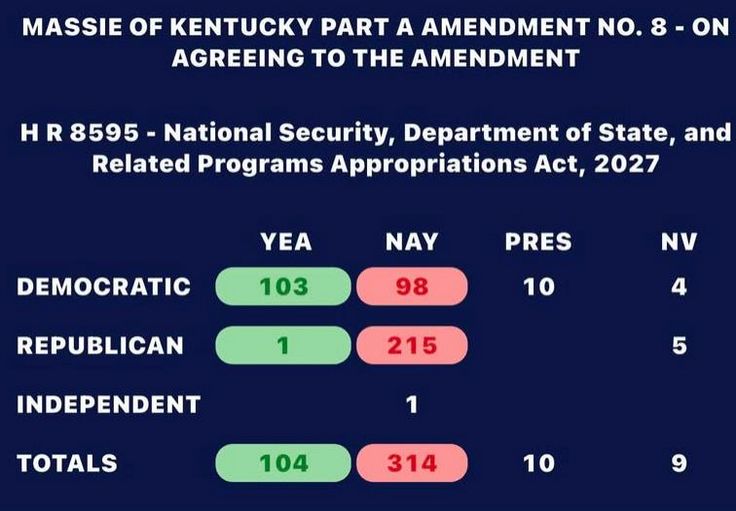
Massie was the only Republican to vote against the US military merger with Israel.
The Senate temporarily blocked the 2027 NDAA bill
On July 13, 2026, the US Senate temporarily blocked the NDAA bill. Senate Democrats claimed they blocked the bill to protest the Trump administration's ongoing military conflict with Iran.
Senate Majority Leader Chuck Schumer (D-N.Y.) stated the bill was a war-funding authorization for the conflict in Iran without appropriate congressional authorization or bipartisan strategy. But in fact, Schumer is one of the biggest war hawks in the Senate. Look closely at the chart behind Schumer and you will see that what he is really calling for is escalation of the war with Iran rather than negotiation! Schumer wants more sanctions on Iran and more assassinations of Iranian leaders as well as US Control over the Strait of Hormuz.

It is therefore certain that in the coming weeks, the Senate will pass the 2027 NDAA with Section 219 and with the record amount of war spending. Meanwhile, the Iran War goes on with no end in sight - and is costing US taxpayers over $1 billion per day
The Israeli Lobby… or the War Machine?
A lot of people are blaming the Iran War on a group of people they call the Israeli lobby – who are a group of very wealthy people who have elected their friends to Congress.
Sadly, it is likely that the corruption runs much deeper. In the 1950’s, President Eisenhower warned against what he called the “Military Industrial Complex.” Here we will simply call them the War Machine.

The Israeli lobby is certainly one component of the war machine. But there are lots of other components including the corrupt corporate media, Big Tech corporations, Big Oil corporations and War Profiteers (aka corporations making billions in profits by making millions of bombs.) Put simply, “War is a Racket.”