II War is a Racket
"War is a racket... A racket is best described as something that is not what it seems to the majority of the people. Only a small 'inside' group knows what it is about. It is conducted for the benefit of the very few, at the expense of the very many. Out of war, a few people make huge fortunes.” General Smedley Butler, 1935
Many have pointed out that the US can not possibly defeat Iran. The more bombs we drop on them, the more determined they become to seek revenge. A US ground invasion would be a suicide mission.
But if Iran was not about to build a nuclear weapon and Israel has been severely harmed by Iranian retailiation strikes, and if there has never been any chance of the US ever winning this war, then why is the US continuing to wage this war? Why is the US continuing to spend billions of dollars every day on a war that severely harms both the US and world economies?
In this report, we will provide evidence that the reason for the Iran War is not about nuclear weapons and is only partially related to the Israeli Lobby. It is even only partially about Iran. What it is really about is making money. Money on a massive and almost incomprehensible scale. It is deliberate. It is diabolical. It is about the takeover of the US government by mega corporations. Some might call it Facism – but it is bigger than that.
The Iran War is about Mega Corruption. But it is extremely difficult for us to see the true magnitude of this Mega Corruption because we all suffer from normalacy bias. In other words, we think that everyone else is just like us. We are honest. So we assume everyone else is also honest. We have compassion for others. So we assume everyone else has compassion for others.
But while our normalacy bias works most of the time, there are some people who have different agendas. They are driven by an extreme ego and an extreme need for money and power. They also tend to be Mega Gamblers. We will provide evidence that they planned the Iran War months and even years before February 28.
I know this sounds like crazy talk. I am making Mega claims. But I intend to back these claims up with Mega Evidence. This evidence includes a long series of events and financial transactions that no one has been able to explain any other way. This report is a long report. But it has Mega implications for the future of our children, our families, our community and our nation. So I hope you will take the time to read at least part of it before dismissing it as crazy talk. Our evidence begins with some blatant rigging of world wide oil prices.
To Follow the Money, Follow the Oil Price Rigging War
It has been said that “all wars are oil wars.” But the Iran War is not like other oil wars the War Machine has been involved in. Because there was no chance of stealing Iran’s oil. Instead, the Iran War seems to have been designed from the beginning to create an oil shortage and an oil crisis. To understand what this war was really about, we need to better understand how oil prices were rigged.
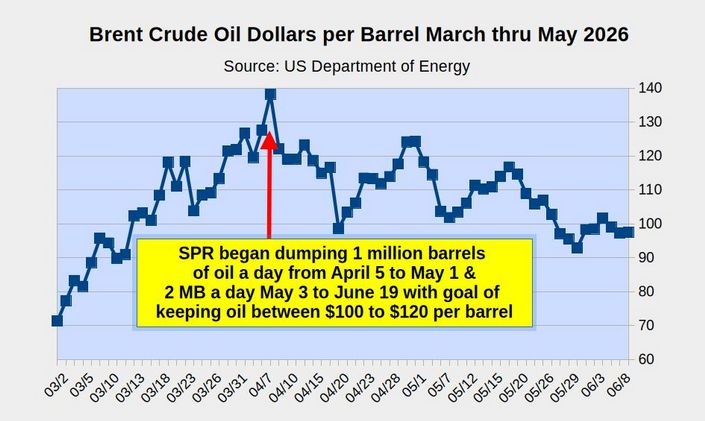
While there are many types of oil, we will follow Brent Crude which is a type of oil from the North Sea. We use Brent Crude deliberately because we think it is less subject to hidden manipulation than other brands of crude oil. The graph below shows that the price of a barrel of Brent Crude rose at the beginning of the war but the price then fell due in part to the dumping of more than one hundred million barrels of oil onto the oil market from the beginning of April to the end of July 2026. Recently, it has been going back up despite SPR dumping:
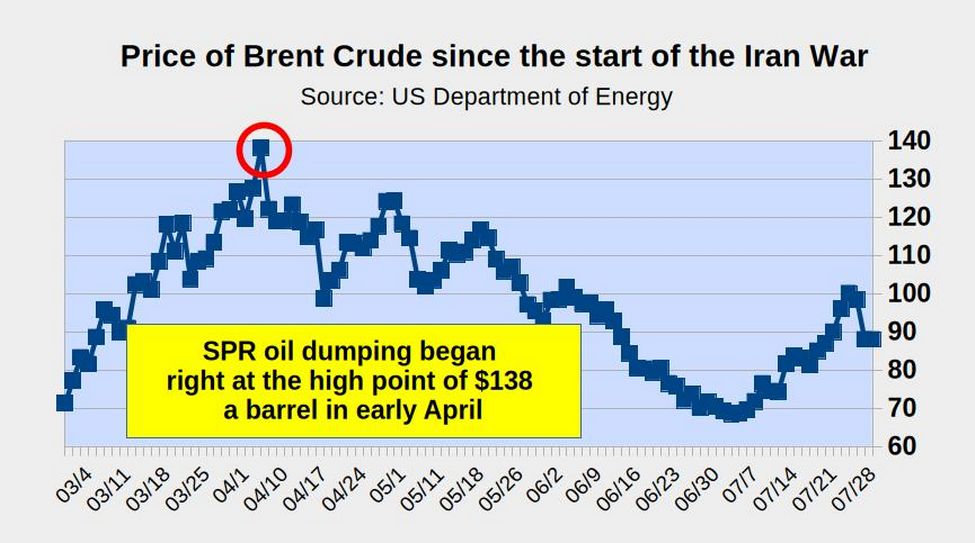
Three things are apparent from looking at the above chart. First, the price of oil doubled in just one month from the beginning of March to the beginning of April. It is almost certain it would have hit $200 a barrel by the end of April had the oil price rigging not occurred. The price of a gallon of gas would have gone over $10 a gallon and the price of food would have skyrocketed. The American people were already against the war by a margin of two to one. They would have demanded that the war be stopped immediately.
While it is possible that Trump released the SPR oil so that he could continue the war, it is also possible that Trump continued the war so that he would have an excuse to release more than a hundred million barrels of oil from the SPR.
What favors the second option is HOW THE OIL WAS RELEASED. It could have and should have been sold on the open oil market through daily auctions. Instead, the SPR Oil was loaned to Oil traders who then used the oil not just to lower the price of oil – but to manipulate the price of oil in order to make billions of dollars in profits on rigged oil trades.
The second thing that is apparent from the previous chart is that there were three major price drops. These occurred on April 8 with a $16 drop, then April 16 with an $18 drop and May 5 with an $11 drop. The reasons given for these price drops was that they were caused by Trump Tweets. But these reasons are completely inadequate. Trump has given more than 40 misleading Tweets in the past six months. Oil traders can not possibly be so stupid or naive that they continue to believe these Trump Tweets after being lied to 40 times in a row. For the oil price to drop three times just because of a Trump Tweet – but not the other 37 times Trump tweeted about the war - is therefore just not credible. We need a more credible explanation and will look at this in a moment.
The third thing the above chart shows is that the degree of oil price fluctuation was dramatically higher in April and May than in June and July. Something happened at the beginning of June which we will examine more closely right now.
On March 11, Trump announced that he would release 172 million barrels of oil from the US Strategic Petroleum Reserve. The claim was that this oil would be released on March 16, 2026. But in fact, SPR oil did not really start getting dumped on the market until the first week in April. Below is a chart of the “balances” left in the SPR on each Friday from March 20 to the end of July – showing the total release of oil for that week – a number issued every Wednesday by the US Department of Energy.
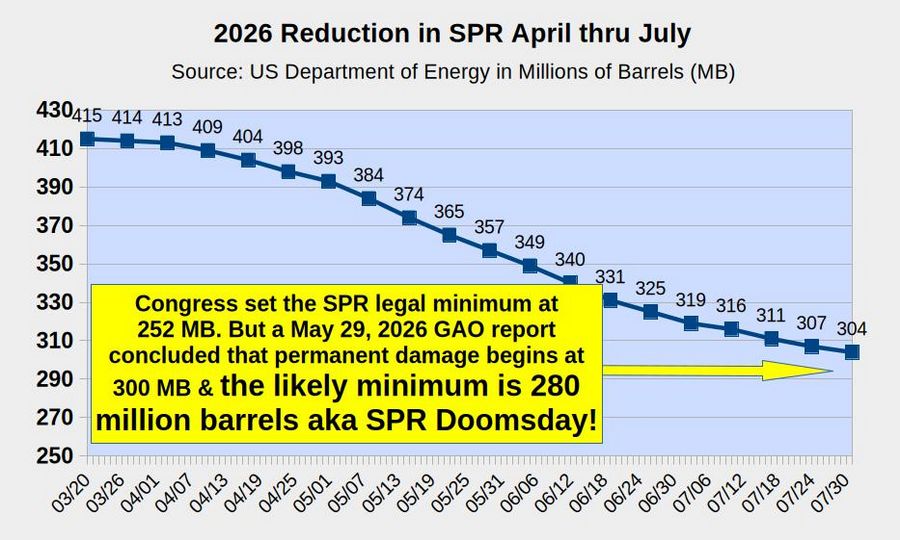
Take a close look at the rate of reduction of the SPR. From April through June, it declines at a large rate averaging 9 million barrels per day. But this rate was suddenly cut in half from the last week in June through July to 4 MB.
How to Determine the Drawdown rate and why it matters
The drawdown rate can be determined from the above graph. It is the amount of oil in the SPR each Friday minus the amount of oil in the SPR the next Friday. So for the eighth week, the drawdown rate was 393 MB minus 384 MB for a Drawdown rate of 9 million barrels taken from the SPR during that week. It matters because it should provide a rough estimate of how much oil was dumped on the market that week if the oil was released in a consistent rather than rigged manner.
But as is shown in the table below, there is no predictable relationship between either the steep early Drawdown rate of the early months or the more gradual Drawdown rate of the later months.
Below is a Table of the Weekly Drawdown total amounts in Millions of Barrels compared to the price rises or drops during the same week.
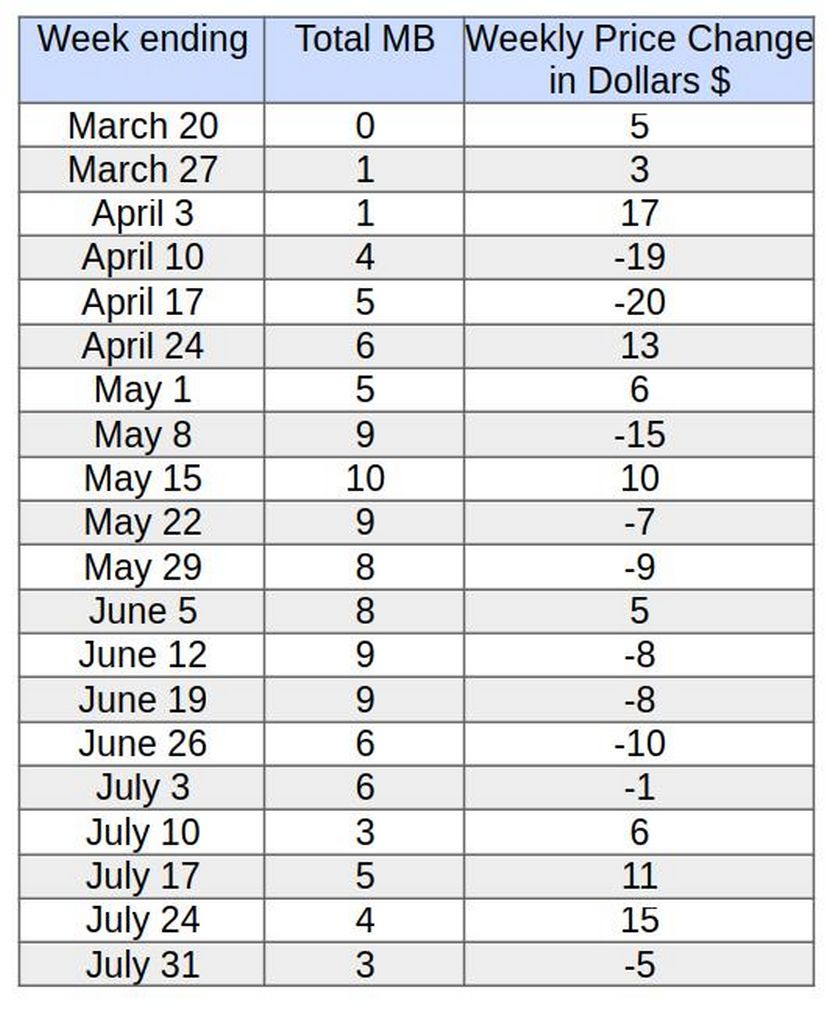
If the oil was placed on the market in a consistent manner, similar to the SPR Drawdown rate, we would see the price of oil fall during high SPR Drawdown weeks. And we would expect the price of oil to rise during low Drawdown weeks. But this is not at all what happened. During the weeks ending April 10 and 17, the price of oil fell by $19 and $20 when the Drawdown was only 4 and 5 million barrels. By contrast, during the highest Drawdown week from May 10 to May 15 of 10 million barrels released from the SPR, the price of oil actually went UP $10 a barrel.
This unexplained pattern is our first clue that there was and still is some extreme monkey business going on. We will show shortly that this monkey business was and still is due to Mega Corruption.
Below is a chart of the extreme price fluctuation in April and May:
Compare this to the smooth and steady changes in June and July:
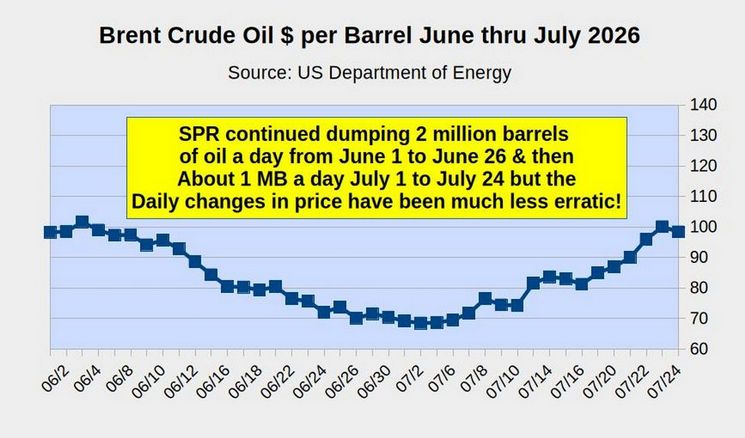
Something clearly happened right around the first of June to change the pattern from erratic to smooth. What was it? One possible explanation is that reporters started asking questions in May 2026 about rigging and the US Justice Department promised to look into it. But in fact, they never did.
Why and how did SPR rigging cause a huge gap between the Paper and Boat price of oil?
Another issue we need to better understand is the $40 per barrel gap between the Paper or Contract price of oil and the Spot or Boat price of oil. The paper daily price of oil is the price tracked by the US Department of Energy and can be downloaded from their website.
The spot price or boat price is tracked by a group called USO which summarizes the contracts that ship owners pay to load oil onto their tankers – which is why it is also called the Boat price. The USO or Boat daily prices can be downloaded from THIS LINK.
Normally, the paper price and boat price are similar - as can been seen by the first month of the following graph. However, starting in April, 2026, once the SPR rigging got going, the rigging caused a huge $40 a barrel difference between the paper price of oil and the real or boat price of oil.
This fact tells us that most of the oil contracts from the SPR were used to rig the paper price of oil rather than the real price of oil.
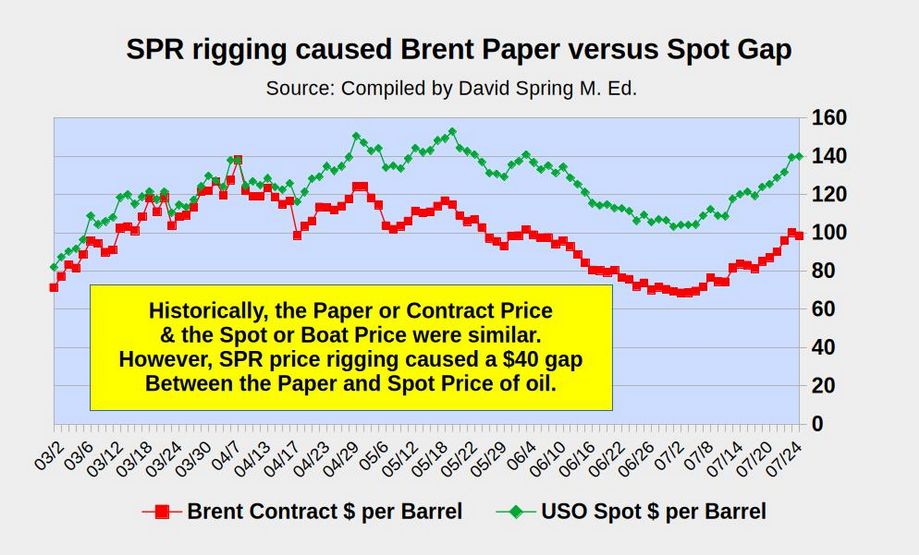
There is no question that the paper price rigging also affected the boat price – which never went above $160 per barrel – at least not yet. The affect however was indirect in that adding 100 million barrels to the contracts partially reduced the demand for the boat oil from the Persian Gulf and thereby held even greater price increases in check.
Refined oil crack spreads are higher
The margin refiners earn by turning crude oil into gasoline and diesel is known as the crack spread, and it recently surged to a record high.
The most widely watched version is the 3-2-1 crack spread, calculated by taking three barrels of crude oil and refining them into two barrels of gasoline and one barrel of diesel. Comparing the dollar value of what comes out to the cost of what went in gives the refiner's margin. Historically, the Crack Spread was about $30 – meaning that the refinery added about $10 to the cost of each barrel of oil. So, if oil was at $60, the refinery added about 15%. However, in the past few months, while the price of oil has gone from $60 to $90 – an increase of 50%, the crack spread has gone from $30 to $60 – an increase of 100%.
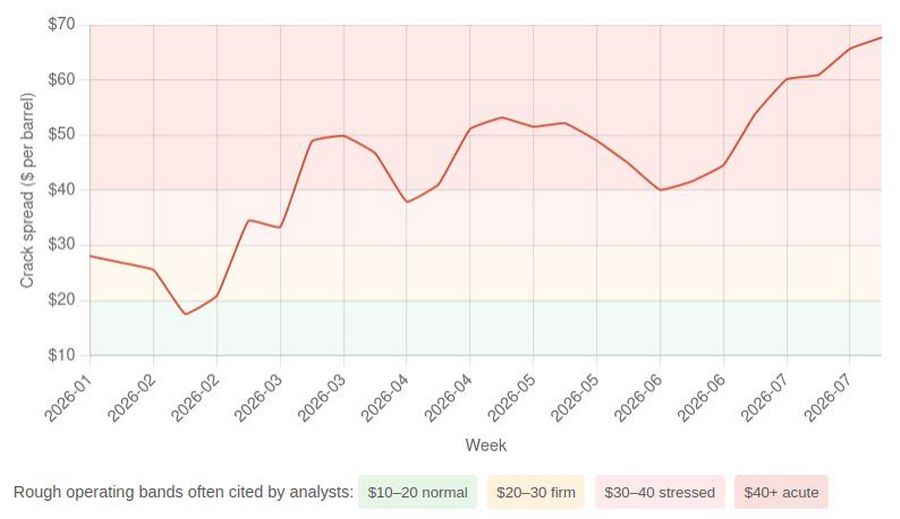
While some of this $60 gap is due to excessive profits, it is mostly due to the war-related shutdowns of competing oil refineries in Russia and the Persian Gulf. This has dramatically increases exports from refineries in the US to places like Europe. In other words, US refineries benefit financially when US missiles strike Russian and Persian Gulf refineries.
Is Canada really off-setting the loss of Persian Gulf Oil?
Most of our heavy crude oil imported into the US comes from Canada. But some of our imported heavy crude oil comes from the Persian Gulf as is shown on the following graph:
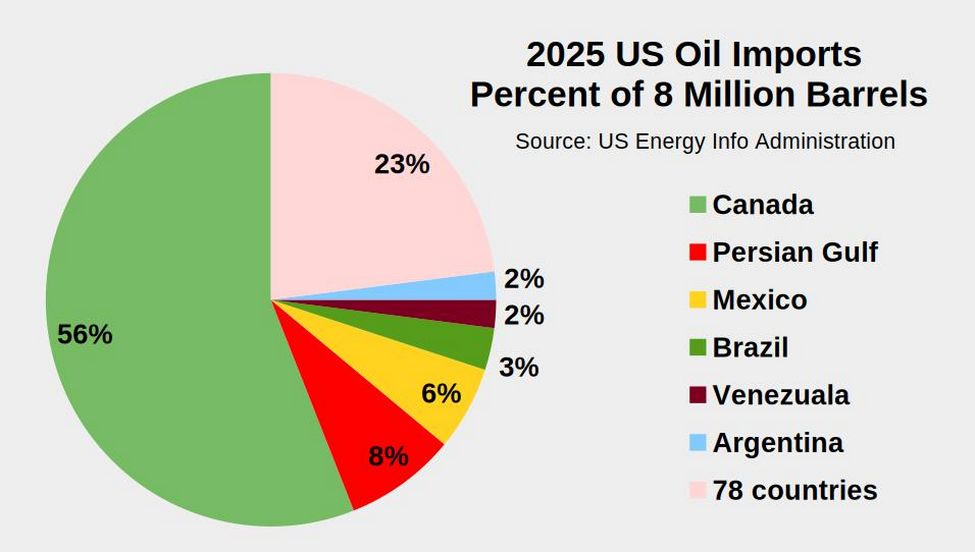
In 2025, the United States imported about 8 million barrels per day (b/d) of petroleum. According to the US Energy Information Administration, 56%% is from Canada, 8% from Persian Gulf Countries, 6% from Mexico, 3% from Brazil, 2% from Venezuala, 2% from Argentina and the remaining 27% from 88 countries scattered around the world.
What we import from both Canada and the Persian Gulf is heavy oil – which we mix with US Light oil to make diesel fuel and jet fuel. Eight percent of 8 million barrels a day is 640,000 barrels of heavy oil a day that we used to get from the Persian Gulf but we are not getting right now due to the Iran War. The question is whether Canada has been able to take up the slack.
Put another way, has Canada increased their oil production in 2026?
According to the Novi Labs, Alberta Energy Regulator ST3 Oil Monthly Report, the short answer is “yes, but not by much.”
Their monthly report is in cubic meters rather than barrels of oil. But we can convert their report to barrels of oil by noting that each cubic meter of oil equals 6.2 barrels of oil.
The following chart shows that crude oil imports from Canada (primarily Alberta) on a per day basis are basically unchanged from 2025.
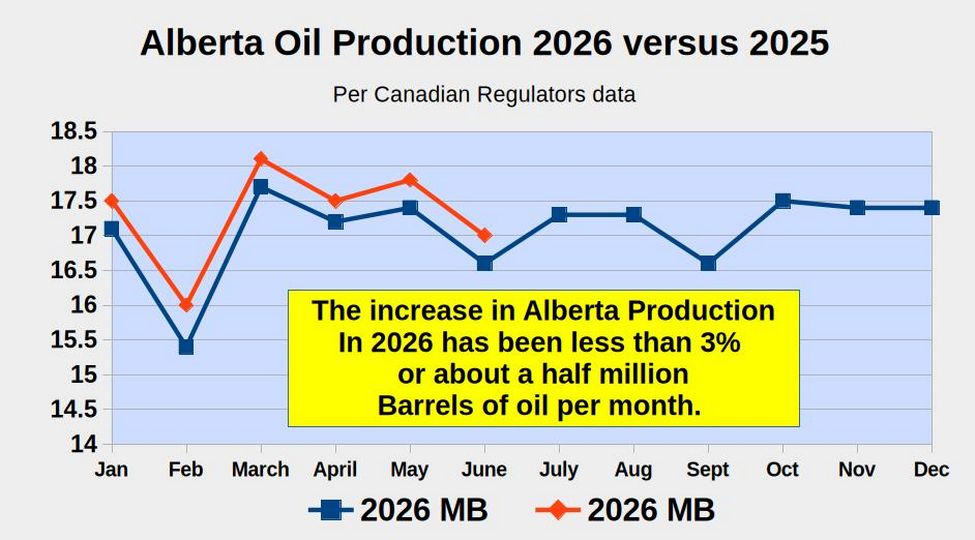
Canada has increased production but only by 500,000 barrels a month. Divide by 30 and this is only 16,667 barrels a day. This is a drop in the bucket compared to the 640,000 barrels of heavy oil a day that we used to get from the Persian Gulf but we are not getting right now due to the Iran War. This is why our deficit of heavy oil is growing worse every day.
Some of this is being made up by the average of 5 million barrels a week from the SPR. But as we noted above, nearly all of the oil from the SPR was exported to Europe and Asia. So what is really happening is that the increased price of diesel has led to a lower demand in the US for diesel.
Why were there wild price changes in April and May but not in June and July?
The answer is that the oil commodity market is like a Las Vegas casino. Traders make money either by betting that the price of oil will go up or that the price of oil will go down. Betting that the price of oil will go up is called “Going long” while betting that the price will go down is called “Going short.” Traders can also rig the price of “Future” contracts by betting that they will go up or down.
It is obvious from the above charts that after the 100 million barrels of oil was loaned (aka given) to the 14 lucky oil companies (which we will name below), these oil companies dumped the contracts on the commodities markets at prices that were slightly lower than the current daily price. So if the current daily price was $100 a barrel, they would sell 1000 contracts for 1000 barrels of oil at $98 a barrel and suddenly, the price of oil for that day is lowered to $98 a barrel.
Why was the SPR Oil given to a few Oil Corporations rather than being sold in the open market through daily auctions?
Selling on the open market would have added the same amount of oil to the market – but it would have been too consistent and predictable. It would not have allowed a few corporations to rig the oil market. The only way to truly control and manipulate the oil market was to give the oil away and then unleash these suddenly rich oil traders on the market where they could corrupt the market like a virus or a parasite. Selling oil contracts of 100 million barrels of oil at an average price of $100 a barrel meant that the 14 lucky oil companies made (or robbed from the tax payers) $10 billion or more – maybe $13 billion.
The reason the weekly oil price drops were not related to the weekly SPR releases is that the oil was clearly not dumped on the market the same week it was given to the Lucky 14 Oil Companies. Instead, the oil companies held onto these free contracts for a week or two and then dumped them on the market at a day and time of their choosing. But it is also obvious that any person at any of these 14 companies who knew the date and time when their company was going to dump a million barrels of oil on the market would be able to make a killing by “shorting” the oil market an hour or so before the oil was dumped on the market. This is likely where most of the money was made.
A person who knew when the oil would be dumped could buy a thousand oil contracts at $100 a barrel and then sell the contracts at $98 a barrel and make a quick $2 million or even $200 million in a single hour. They literally could not lose. Not only did they have “insider trading” information on when oil was going to be dumped, but they were playing with House Money – in other words with billions of dollars they robbed from we, the tax payers.
I want to be clear that the kind of price rigging done by the 14 Lucky Oil Trading Companies was radically different from the four famous Insider Trading events that occurred just minutes before Trump announcements or social media posts. To see the difference, we will take a closer look at all four of Insider Trading events linked to the Trump announcements.
On May 7, 2026, Reuters posted an article called “$7 Billion in Oil Bets Under Investigation.” Here are a couple of quotes from their article: “The bets took place on two major exchanges that host global oil futures trading: the Intercontinental Exchange (ICE) and Chicago Mercantile Exchange (CME)… The Commodity Futures Trading Commission has launched an investigation into short oil bets worth a total $7 billion.
These bets were made in March and April, 2026 right before statements by President Donald Trump that led to oil price drops… On March 23 and on April 7, 17 and 21, oil prices plunged by over 10%. Reuters calculations show that a short seller with $7 billion could have made hundreds of millions of dollars in profits… U.S. authorities, such as the CFTC, can access exchange data to trace who placed the trades.”
“On March 23, Trump announced a delay to threatened attacks on Iranian power infrastructure at 1105 GMT. Between 1049 and 1050 GMT that day, traders placed bets on 20,000 lots of Brent and WTI futures. The selling was spread across the first, second and third month contracts, worth $1.35 billion. Oil prices dropped by 15%.”
“On April 7, sell orders on oil and gasoline prices worth $2.12 billion took place between 1944 and 1945 GMT, well after the market settled, a time when volumes are usually thin. Minutes later, Trump announced a two-week ceasefire with Iran.. Oil prices fell 15% following the announcement.”
“On April 17, nearly $2 billion in Brent, WTI, gas oil and gasoline futures were sold at 1224-1225 GMT, minutes before Iranian Foreign Minister Araqchi said Hormuz would reopen, followed by multiple social media posts by Trump and U.S. officials.”
“On April 21, $830 million worth of Brent and WTI contracts were sold just 15 minutes before Trump extended the ceasefire. The announcement led to a drop in Brent crude from $100 to $97.”
Here is a graph of the March 23rd Insider Trading event:
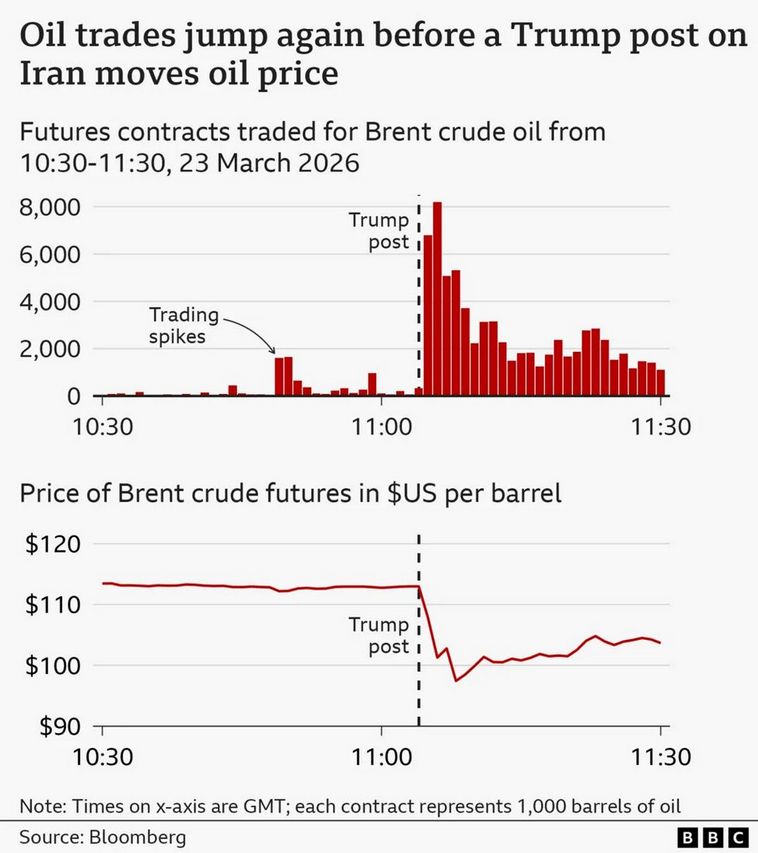
Note that the two big trading spike contracts were each just under 2,000 contracts. At a 1,000 barrels of oil per contract, each of the Trading spikes were for just under 2 million barrels of oil. At $110 a barrel, this was a $2.2 billion dollar bet. But they likely only needed to put 10% down so they really put in $220 million dollars. Note also the huge volume of trading contracts sold after Trump made the announcement. It was this huge volume that actually forced the price to go down.
While the CFTC claimed they were going to investigate the above four trades, no names were ever released and no charges were ever filed.
Here was the outcome of these four trades:
March 23: After falling from $118 to $103 per barrel, within a week, oil was at $119 a barrel.
April 7: After falling from 138 to 124, within a week, oil was at 128.
April 17: After falling from 116 to 98, within a week, oil was at 113.
April 21: After dropping 3%, the price rose 9% hours later.
The quickly rising prices indicated that oil had not been dumped on the oil market. Thus, these four events had nothing to do with dumping oil contracts and had almost no effect on the long term decline in the price of oil.
On April 20, 2026, the BBC posted an article called “The insider tracing suspicions looming over Trump’s presidency.”
The BBC was pushing the narrative that it was a few corrupt traders close to Trump that were causing the price shifts. But as we have just shown, the price shifts may have temporarly affected the price of oil. But the prices quickly recovered. Meanwhile the billions of dollars of “day to day and day after day” price rigging done by much larger oil corporations was what was really rigging the price of oil.
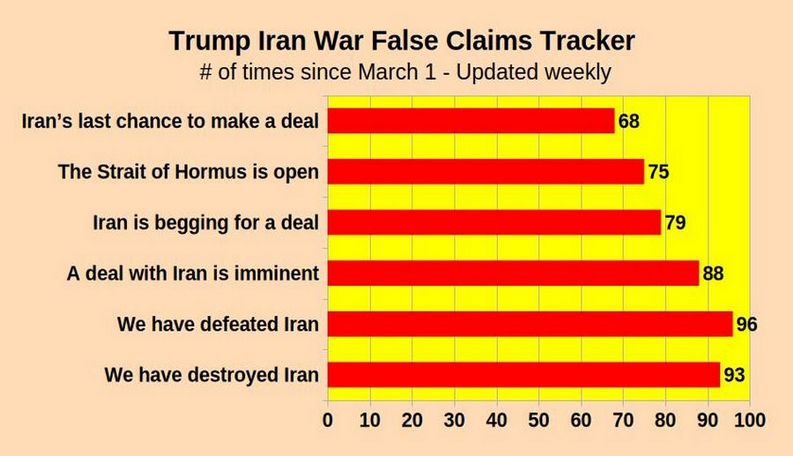
But the real problem is that Trump did not just mislead people about making a deal with Iran the 4 times that the CFTC will look at, he mislead people about being close to a deal more than 40 times!
Fool me once… I won’t be fooled again.. or maybe I will!
On June 9, 2026, CNN posted an article summarizing 38 times in the preceding three months Trump had announced that an end to the U.S. war on Iran was around the corner. On June 11, another news source posted a series of examples.
On March 2, Trump said “We project four to five weeks to end the war.”
On March 9, Trump said that “the war is pretty much over” and the US military operation was “way ahead of schedule” and “we have already won.”
On March 21, Trump warned that he would “obliterate” Irans power plants unless Iran opened the Strait of Hormuz in 48 hours.
On March 23, Trump claimed that Iran had caved and agreed to his demands. Trump claimed that “major points of agreement” — indeed, “almost all points of agreement” — had been reached between all parties involved. Iranian officials denied that there was any negotiations.
On March 25, Trump claimed that “Iran wanted to make a deal so badly.”
On March 26, Trump claimed that the Iranian negotiators “are begging for a deal.” That claim fell apart a few days later. Iran’s top negotiator denied that there was a deal and accused Trump of using “fake news” to manipulate oil and financial markets.
On March 29th, in response to a reporters question on whether a deal will be finalized with Iran in a week, Trump said, “I do see a deal in Iran, yeah.”
On March 30th, Trump again threatened to destroy “all of Iran’s generating plants and oil wells” if a deal was not reached soon.
On April 1st, Trump warned that he was going to “strike Iran hard and send them back to the Stone Age” if they did not agree to his demands.
On April 7, Trump warned that “a whole civilization will die tonight” if Iran did not cave to his demands.
On April 8, Trump he will suspend attacks on Iran for two weeks on condition that Tehran opens the Strait of Hormuz. He wrote, "A two-week period will allow the Agreement to be finalized and consummated. He also posted that the US is “very far along with a definitive agreement concerning longterm PEACE with Iran.” But the deal never materialized.
On April 15, Trump said in a TV interview, "I think it's close to over," and he told reporters the next day, "It's looking very good that we're going to make a deal with Iran, and it's going to be a good deal."
On April 17, Trump claimed that Iran had "agreed to everything," that "I think we will get a deal in the next day or two," and that "I don't think there's too many significant differences" and that “Iran had agreed to everything.”
On April 21st, as the ceasefire neared its end, Trump said “the military is raring to go I expect it to be bombing tonight.” But within hours, he announced the agreement had been extended indefinitely.
On May 5th, Trump announced “Project Freedom” whereby US ships would re-open the Gulf of Hormuz. A few days later, he said that the mission would be temporarily paused “for a short period of time.”
On May 18, Trump announced he was delaying planned strikes on Iran. He reportedly said that the two sides have had periods of time where they thought getting closer to making a deal and it did not work out, but, "This is a little bit different… A deal was very close.”
On May 23, Trump said he was “getting a lot closer to a deal” which was “largely negotiated and subject to finalization.”
On May 24, Trump posted on social media that “an agreement has been largely negotiated” between the US and Iran.
On June 7, Trump stated, “We are very close to a deal with Iran. It is going to be a good deal.”
On June 9, Trump stated, “We’re in the final throes of what will be a very, very good deal” adding that an agreement that includes the reopening of the Strait of Hormuz and an end to Iran’s nuclear program could be signed “in two to three days.”
On June 11, Trump stated, “Iran is begging to make a deal.”
On each of these occasions, Iran denied that they were even negotiating much less reaching a deal. For example on June 9, Mohammad Bagher Ghalibaf, Iran’s chief negotiator, replied that the U.S. is “neither seeking a ceasefire nor seeking dialogue” with Iran. Yet on each of these occasions, the price of oil fell on hopes that a deal would be made.
It is not possible that oil traders by the thousands keep getting suckered more than 40 times in a row into believing Trump claims every few days that peace is just around the corner.
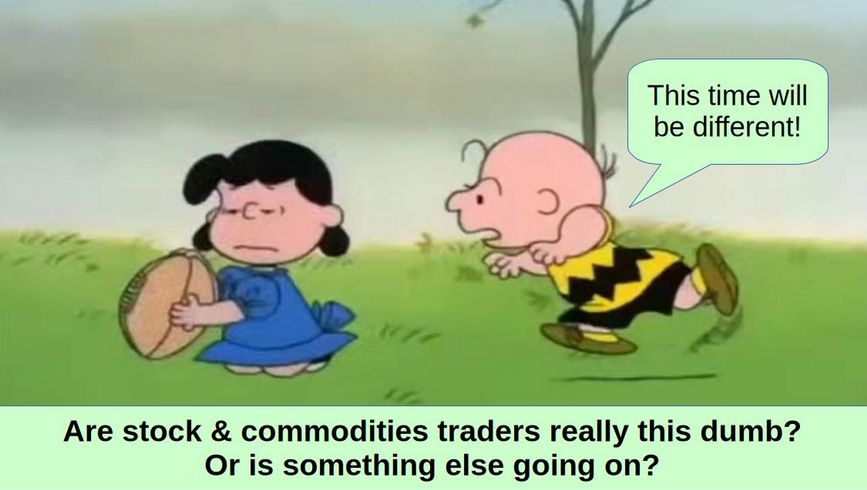
It is far more likely that a few massive corporations are using billions of dollars in free money from their SPR loans – timing them with the Trump Tweets - to rig the oil market to their own advantage. They make money when prices goes up. And when prices goes down.
Has global demand for oil really fallen?
A final reason given for the recent stabilization in the price of oil is that, due to the rising price of oil, demand for oil has fallen thus stabilizing the oil price. According to the International Energy Agency's July 2026 oil market report, which covered the month of June – a period of stable or declining oil prices - the world oil supply has fallen by about 10 million barrels a day but global demand has fallen by 1 million barrels a day. While the report attempted to paint a very rosy picture, the fact remains that world oil demand was in the range of 100 million barrels a day. So a decline in demand of 1 million barrels a day is only a one percent reduction in demand.
How much money are the Lucky 14 oil corporations making?
In the next two sections, we will look at how much money the 14 Lucky Oil Corporations who were given for free more than 100 million barrels of oil have made in the past few months. It is mega corruption on a truly epic scale.
As just one example, one of the 14 Lucky Corporations was ExxonMobil. They were in fourth place after being loaned or given 14.4 million barrels of oil which at $100 a barrel converts into $1.44 billion in free money. ExxonMobil issued a regulatory update on July 7, 2026, signaling a $5 billion dollar increase in profits for the second quarter compared to the first quarter of 2026. The company will report official second-quarter profits on July 31.
Analysts expect Exxon to report $15.7 billion in earnings for the quarter, according to LSEG, about triple first quarter earnings. In other words, they expect that the actual increases in profits to be about $10 billion with monthly profits of $5 billion and weekly profits of more than $1 billion per week.
How much damage has Iran done?
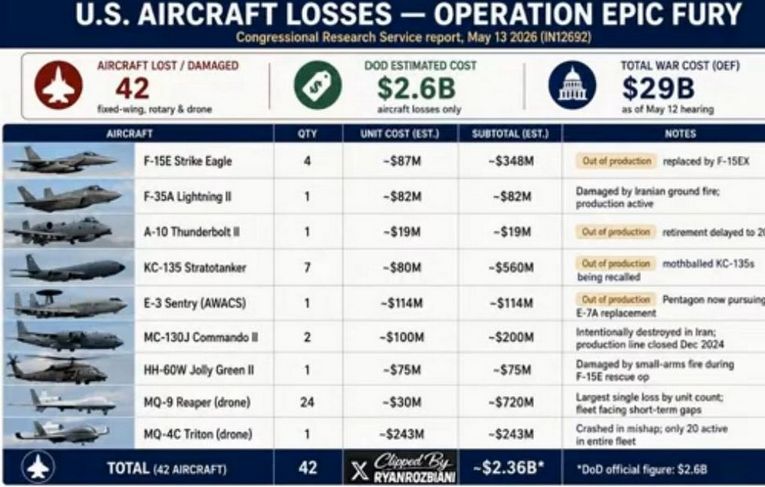
On May 13, 2026, the Congressional Research Service reported that Iran had already destroyed 42 US aircraft:
In addition, by July 24, Iran had struck and destroyed buildings in at least 8 US military bases:
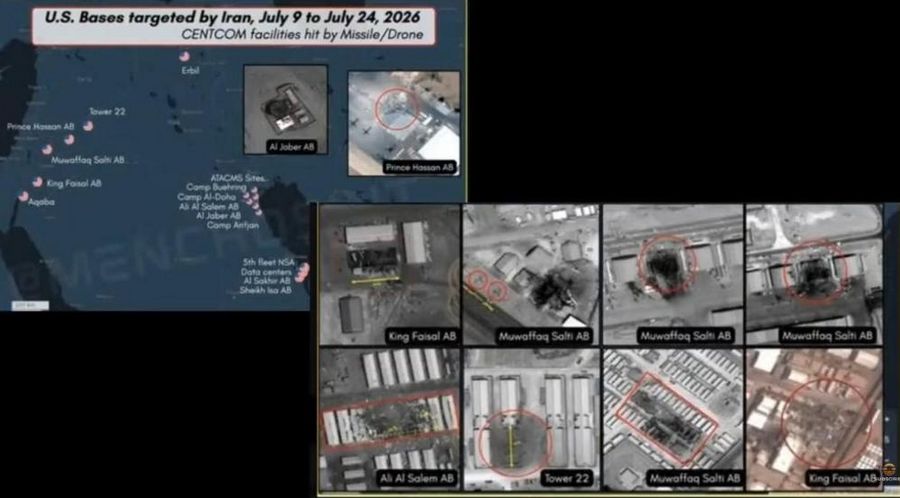
Here is just a partial list of US assets destroyed by Iran in July:
Radar and air-defence systems: 7 command centers, 3 satellite communications systems, 6 Patriot air-defence radars, 3 air and maritime surveillance radars, 8 detection and early-warning radar systems, 7 air and missile-defence radars, 3 EPS radar systems, 2 EPS-117 radars, 5 long-range radars, 2 air-defence radars, 1 tactical radar complex
Support and logistics facilities: 6 fighter-jet and helicopter maintenance centers, 3 support and logistics centers, 12 fuel-storage tanks, 17 warehouses storing weapons, spare parts, naval equipment, and aircraft components, 6 missile-storage depots
Operational infrastructure: 6 MQ-9 drone hangars, 1 F-15 fighter-preparation hangar, 1 drone hangar containing 8 factory-new drones, 2 command centers, 1 aircraft-carrier refuelling platform, 1 P-8 aircraft hangar, 4 HIMARS missile-launch platforms, 5 fighter-aircraft hangars, 4 Patriot air-defence complexes, 6 missile-launch platforms, 1 fuel-pumping station, 2 signals-communications centers, 1 intelligence data center, 1 depot for remotely operated unmanned surface vessels, 1 fuel pier, 4 fighter-aircraft shelters, 6 aircraft parking and operating ramps, 1 artificial-intelligence and data-processing facility associated with Amazon
Aircraft and aerial assets: 11 fighter aircraft and helicopters destroyed or damaged on the ground, including 8 factory-new aircraft, 1 F-15 fighter jet inside a shelter, 1 P-8 maritime patrol aircraft, 1 C-17 transport aircraft, 8 aerial refuelling aircraft, 4 heavy helicopters, 6 stored missiles, 17 operational drones,
Will the War Machine run out of missiles?
Some have claimed that the War Machine will run out of missiles in August. We will not spend much time on this question because, in terms of the core issue of the coming Economic Mega Crisis, it does not really matter whether the US runs out of missiles or not. We will suffer an Economic Mega crisis in 2027 whether the Iran War continues another two weeks or another two years.
Still, if the War Machine runs out of missiles before the 2026 election, it could increase the likelihood of a Democrat Sweep. So, we will take a brief look at claims versus facts as of August 1, 2026.
Recently, Trump told the Wall Street Journal, “We have far more munitions than anyone in the world, and far more than we need. “ White House spokeswoman Anna Kelly called the report that munitions are dwindling “totally false.”
However, a May 27, 2026 report by the Center for Strategic and International Studies combined with an August 4, 2026 update, leads to a more alarming conclusion. Here is a table based on these and other reports:
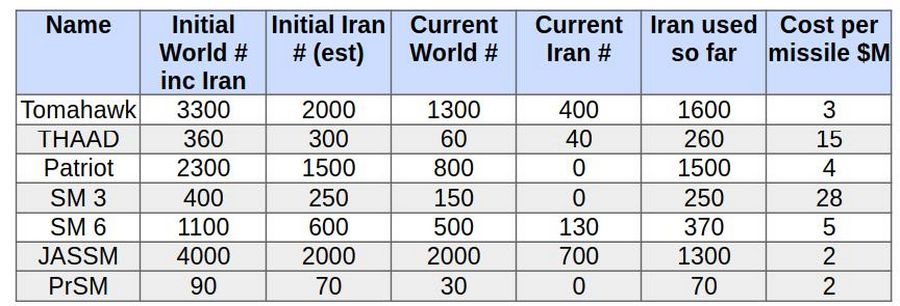
We need to stress four things about the above table. First, they are wild guesses based on limited information. Second, the table assumes that half of the world supply was committed to the Iran War. Third, it is likely that some of the world supply has been transferred to the Iran War recently to keep the war going.
Fourth, the above estimates do not include missiles controlled by the Israeli military. So, even if a missile such as the Patriot shows 0, there are likely still a few Patriot interceptor missiles at a few key locations.
Even with these considerations, it is likely that the defensive missiles, such as the THADD and Patriot are either out or very close to out. This fact is likely why the US decided to withdraw from all of their military bases close to Iran in the past few days. In addition, the offensive missiles are getting low. Even with transfers from around the world, they might last only a few more weeks. There is a high chance they will be out before the November 2026 US Election.
Running out of defensive missiles makes it highly likely that Iran will be able to destroy the water and oil facilities of other Gulf states in the coming weeks. If and when this happens, it will greatly worsen the coming Economic Mega Crisis in the US and around the world.
Yet Another Atttempt to Fool Us into thinking Peace is around the corner
On July 27, 2026 Donald Trump said he was temporarily halting his bombing of Iran because he was having “deep talks” with Iran and was considering making a deal with the Iranians. He stated: “We have had some very good talks. But if they do not make a deal, then I go back and I finish the job… I think we have a strong position right now. They know what I am going to do if they don’t make a deal.”
Iranian Deputy Foreign Minister Kazem Gharibabadi replied: "We have not submitted any request to negotiate with America during the past 15 days. The Americans are the ones who asked us to hold a dialogue, and they informed us through Oman that they will not carry out military actions against us. But the Strait of Hormuz will never return to its pre-war state.The Strait of Hormuz has become part of our national security and it provides defensive capabilities, and we will never give it up,"
Oil prices fell on the rumor that Trump was about to make a deal to end the Iran War. But it immediately went back up the next day when the bombing on both sides resumed.
On July 31, CBS, which is one of many lying legacy news outlets owned by the War Machine, reported that unnamed sources “leaked” that the US and Israel were preparing to bomb energy related targets in Iran including power plants and oil refineries “pending final approval of Trump.”
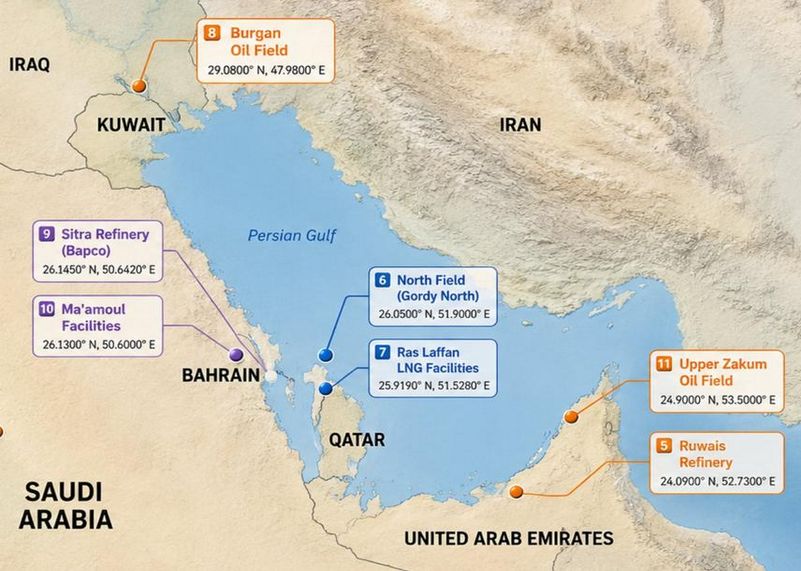
On August 1, Iran responded to Trump’s threat by stating they would attack the water and energy systems of other Gulf States who were assisting the US. They provided this list of targets they would strike:
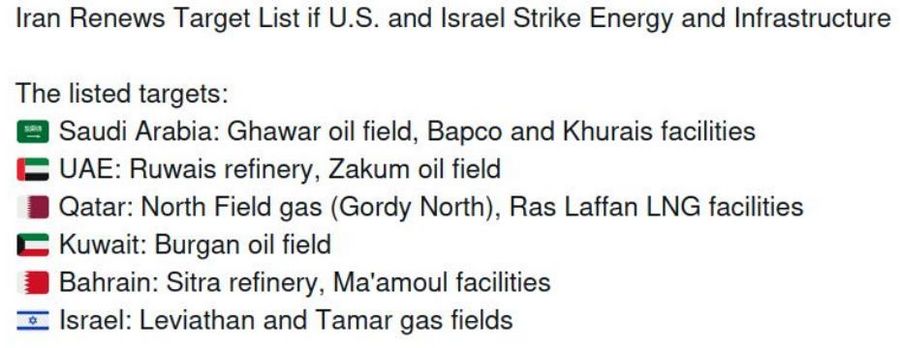
They also provided this map showing the locations of the targets:
A few hours later, on August 1, at 7 pm Eastern Time, Trump announced on social media that he will cancel his pending attack on Iran because he had been asked by Iran and other Middle East Countries to hold off any attack until a “deal has been agreed to.” Here is a quote from his post:
“This (The deal) would include the Immediate, Complete, and Total OPENING OF THE HORMUZ STRAIT, and an end to Iran’s nuclear threat. Based on this request, I have agreed, for the future benefit of the WORLD and, likewise, the survival of a successful and prosperous Iran, to cancel the attack, subject to being able to rapidly make a DEAL.”
Meanwhile, the War Machine (aka US Central Command) has released an official statement on their X account claiming that the Gulf of Hormuz has been open all along and that “thousands of ships” have passed through the Gulf in the past four months.
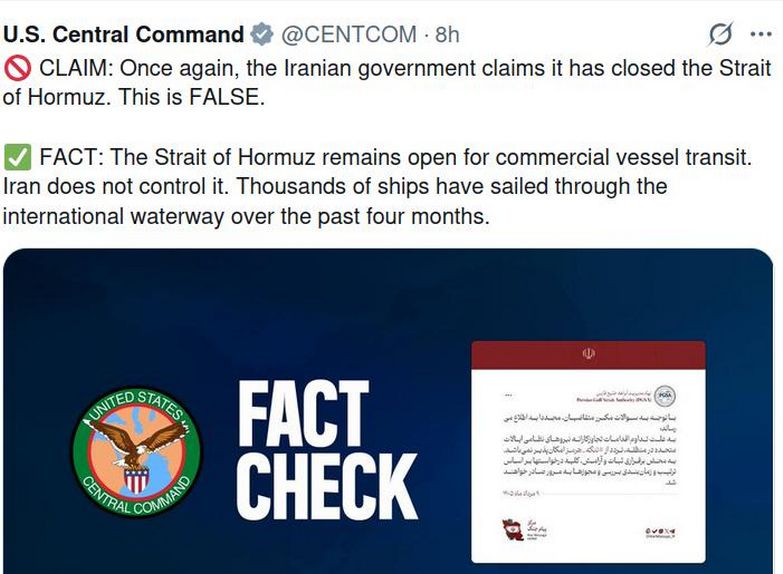
Now for the real facts. Iran has repeatedly stated that there will be no deal unless and until the US takes specific “Good Faith” steps to comply with the MOU Trump signed back in June. Those steps include ending economic sanctions, releasing Iran frozen funds and accepting that Iran will have full control of the Strait of Hormuz.
In the meantime, there never has been and never will be any negotiations. Trump knows this and he is merely pretending to want to end the war. The War Machine is making billions of dollars a day and so the war will go on. Look for more US and Israel “surprise” bombing attacks in the coming days, weeks and months.
All Iran has to do is hit a few desalination plants and the Gulf States will become unlivable
The six Gulf states – Bahrain, Kuwait, Oman, Qatar, Saudi Arabia and the United Arab Emirates – are among the most water-scarce countries in the world and rely heavily on desalination to meet the needs of their combined populations, which exceed 62 million people. Gulf states produce 40 percent of the world’s total desalinated water through more than 400 plants. The UAE, Kuwait, Bahrain and Qatar are the most vulnerable getting 50 to 60% of their fresh water from desalination plants.
August 2, 2026 Update: A video channel called Transition Protocol, which has direct links to some of Iran’s leaders, posted a video summarizing the current position of Iran. They revealed that from July 27 to August 7, China shipped high tech supplies to Iran to upgrade and increase the accuracy of their missile targeting. In addition, they discussed the following four points:
First, Tehran will not yield on the sequencing of the negotiations specified in the June 2026 MOU. The Strait of Hormuz will not be reopened until the US agrees to end the war on the terms of the MOU Trump signed in June.
Second, any attack on Iranian Infrastructure will trigger a 10 to 1 response against energy assets of the Gulf Partners of the US.
Third, the leadership of Iran are convinced that Trump has no viable military or political exit other than an American retreat from West Asia. The objective of Iran is to expel the US from West Asia.
Fourth, the UAE just called Iran and wants to end the war and establish a long term peace relationship with Iran.
In addition, the leader of Saudi Arabia, MBS, told Trump to stand down as Saudi Arabia wanted to end the conflict.
Shortly after this video was posted, another video was posted which was a Press Conference held by the Foreign Minister of Iran. Here are quotes from this Press Conference:
“We have no talks with America for the time being… The Strait of Hormuz was closed because of the American Zionist attacks against Iran. As long as America is violating everything, we will behave in a way to protect our national interests… The American aggression on Iran was not only on Iran. It was on all the countries of the region. Peoples of the region are increasingly opposing the presence of America in these countries and they are asking their officials and their governments to get rid of the American bases in these countries. America must be prevented from misusing the sovereignty of these countries to attack other country.”
“It's not our choice between war and and peace. America has attacked us. We are in a reality and this reality says that we need to be committed perfectly with what is important for the country. What is important for us is the national interest of Iran. “
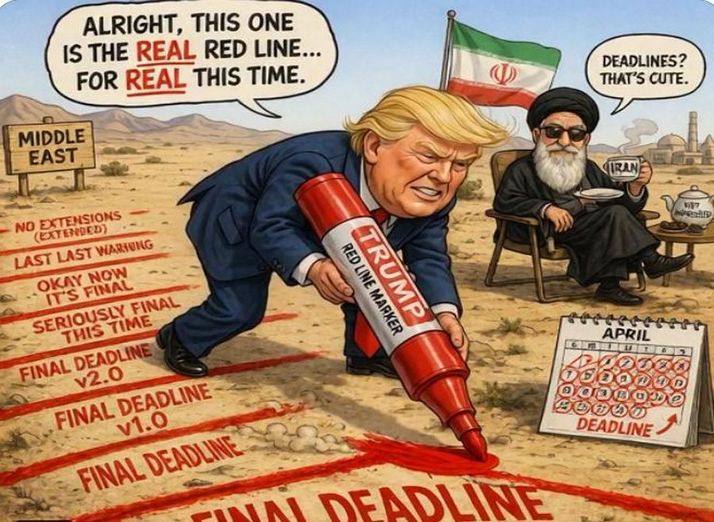
August 4, 2026 Update: Trump set a new deadline, giving Iran until the end of today, to finalize a Strait of Hormuz agreement with Oman or face "devastating air strikes.". Trump adds "I want to give them every last chance before decapitation... You'll find out today."
Iran responded by striking three ships attempting to run through the Strait of Hormuz without their approval.
Also on August 4, Transition Protocol posted a video in which they revealed that Iran and Oman have agreed to jointly operate the Strait of Hormuz by giving Iran total control of inbound ships in the northern route and veto power over outbound ships which would take the southern route with a fee shared by both nations.
August 5 2026 Update: At the last minute, Trump canceled the attack. But he added that he is still thinking about attacking Iran “really hard.”
According to the Transition Protocol channel, it appears that a new agreement between Iran and Oman will begin on about August 15 and extend for 60 days. But Iran will still maintain full control over who enters and leaves the Persian Gulf. During this time, the US is required to lift all sanctions on Iran and comply with the June 2026 MOU and negotiate on that basis. Should the US continue to fail to comply with the MOU, then Iran will close the Strait again. Given the past failure of the US to comply with several conditions of the MOU, it is unlikely that the US will comply. In particular, it is unlikely that Israel will withdraw from Lebanon.
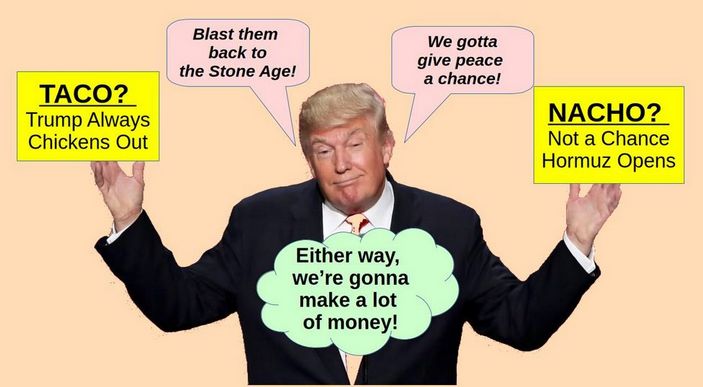
Has Trump really TACO’d (Trump Always Chickens Out) to Iran? What appears to be a major cave to Iran may end up being just another tactical pause—for the U.S. and Israel to rearm and reload their dwindling ammunition stockpiles.
However, with each repeated cycle of Trump’s faux negotiations, threats of annihilation, followed by a pull-back, and then escalation the U.S. and Israel positions only get worse, as US forces continue to retreat from their numerous military bases in and around the Persian Gulf and we get closer and closer to the SPR Doomsday.
August 6 2026 Update: Iran published a plan for the Strait of Hormuz that will bar US and Israeli vessels. The plan imposes fees of up to 7% of cargo value on commercial vessels that pass through the strait. The plan dictates that nations deemed responsible for causing damage to Iran must pay compensation before any transit permission is considered. The plan also fine violators up to 20% of cargo value — with inbound traffic managed by Iran and outbound traffic overseen jointly with Oman. Iran also stated that the Islamabad Memorandum of Understanding remains the unchanged center of gravity.
The Trump administration disputed Iran's characterization of the agreement. A US official stated: "Any temporary routes will be without any impediments — meaning no approvals or permissions and no tolls or charges. The Strait of Hormuz is an international waterway and no party controls the lanes or the ability to transit through them." Trump later said the U.S. currently controls the strait through its naval blockade on Iran.
Trumps claim an agreement will be reached in the next day or two. However, Iran says the only agreement being considered is between Iran and Oman and there will be no negotiation with the US until they comply with the June MOU.
The Least Popular War in US History
The US War against Iran was, from the beginning, the least popular war in US History – and it is becoming less popular every month. A July 13, 2026 Iran War poll found that support for the war had fallen to only 27%. By comparison, support for the 2003 Iraq War was 76% and for the 2011 Libyan War was 47%. A July 27, 2026 Iran War poll found that only 28% of US adults supported Trump’s handling of the Iran War. Support for the Iran War in March 2026 had been only 33%. Crucially, support for the Iran War among Independent voters was only 20%.
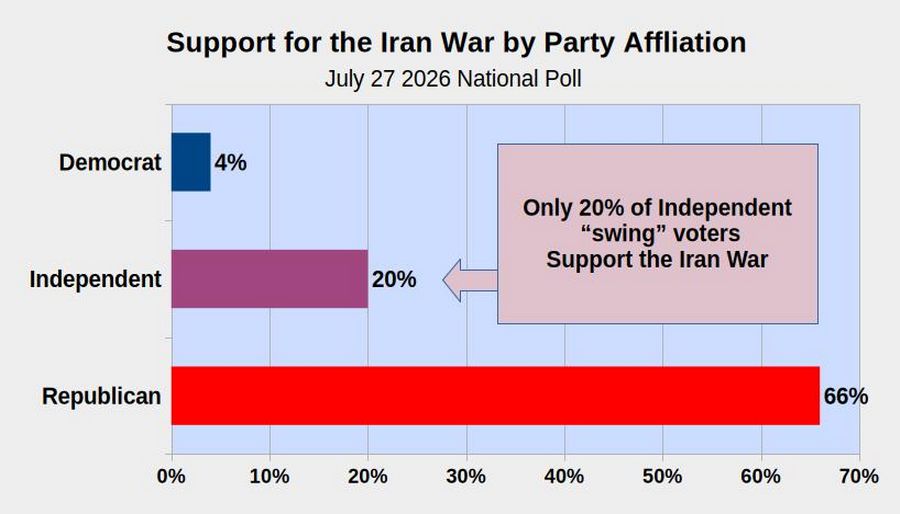
Historically, the longer wars drag on, the less popular they become. This will be particularly true with the Iran War due to its effect on oil prices, food prices and job losses. In addition, most Americans mistakenly believe that the US is winning the Iran War. When they find out the truth, namely that the US is actually losing the Iran War (a fact that is already being reported by Independent Media), support for the Iran War will sink like a rock.
Meanwhile on Wall Street
The U.S. stock market is rallying toward a record on August 4th as oil prices drop. The S&P 500 climbed 1.9% and is on track to top its all-time high set a couple months ago. The Dow Jones Industrial Average crossed 1,000 points, or 1.9%, to its own record set the day before, while the Nasdaq composite was 2.6% higher. The War Machine has to put their war profits some where. It looks like for now, they are investing their profits in Wall Street stocks.